

A Royal Charter is issued by a monarch and is used to define the privileges and purpose of significant organisations who can demonstrate pre-eminence, stability and permanence in their particular field. The objectives of an organisation must be set before a Charter is granted and can only be altered with the agreement of the Privy Council, the body of advisers to the monarchy.
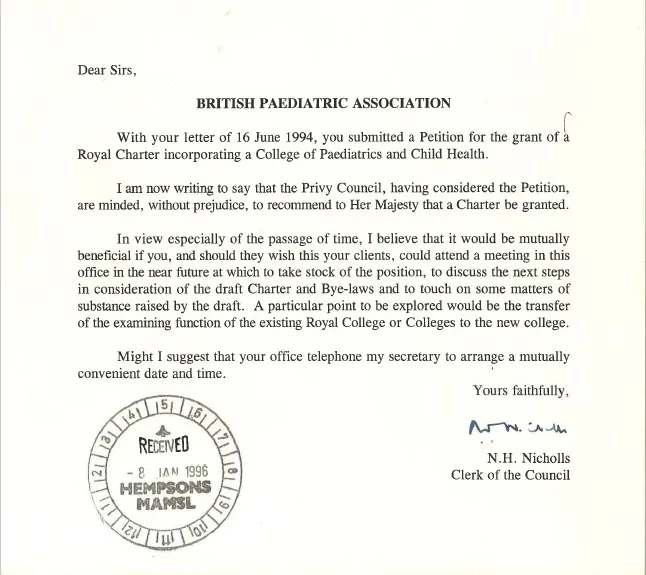
Following the BPA’s referendum, the Association petitioned the Privy Council to grant the Charter. In January 1996, the Privy Council confirmed that they were minded to recommend that a charter be granted and invited the BPA to discuss the new organisation’s bye-laws. These define the rules of the College, such as the workings of the Council, elected officers, members, elections and fees. The bye-laws used to create the Charter followed the existing rules of the BPA – one of the many ways the College maintains its connections to its roots.
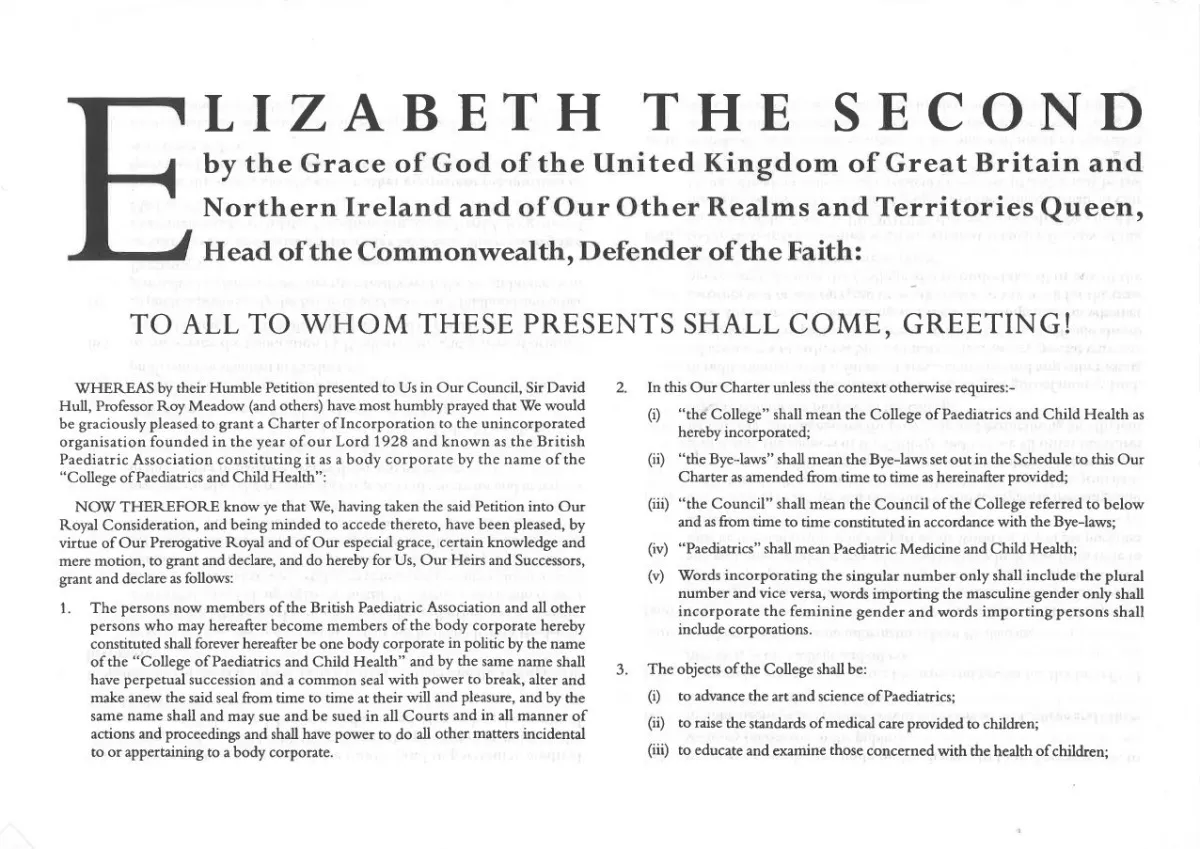
The charter lists four objectives of the RCPCH:
- To advance the art and science of paediatrics
- To raise the standards of medical care provided to children
- To educate and examine those concerned with the health of the children
- To advance the education of the public (and in particular medical practitioners) in child health, which means the protection of children, the prevention of illness and disease in children, and safeguarding their optimal development
The new College laid out its objectives in a press release on the day the charter was granted:
Children do not always receive appropriate priority in this country and too often are second class citizens. Creating a voice for children’s health and an academic body for paediatricians is an important milestone.
The BPA has had a long and illustrious history since its foundation in 1928. But this new status as a College gives us the scope to do more to raise the standards of care and respect for the rights of children.
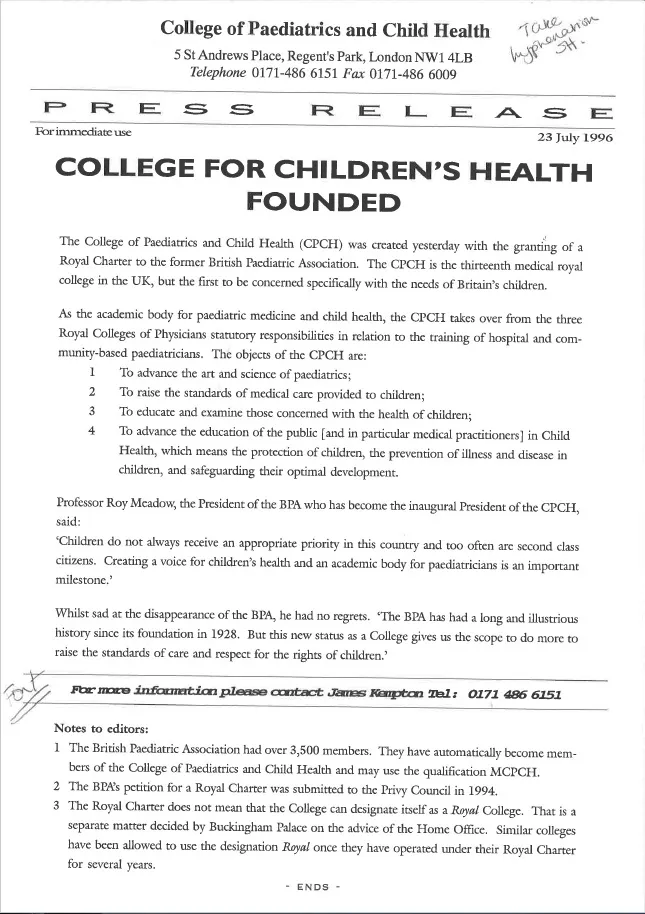
As the press release shows, the granting of a Royal Charter did not mean that the College had the right to be called a Royal College; this privilege was to be decided by the Queen on the advice of the Home Office.
Traditionally, it takes years to add ‘Royal’ to a title, although it was intended that RCPCH would be able to use the Royal designation immediately. An administrative error delayed matters, so for its first few months it was known as the College of Paediatrics and Child Health. The College was able to add ‘Royal’ to its title in October 1996.
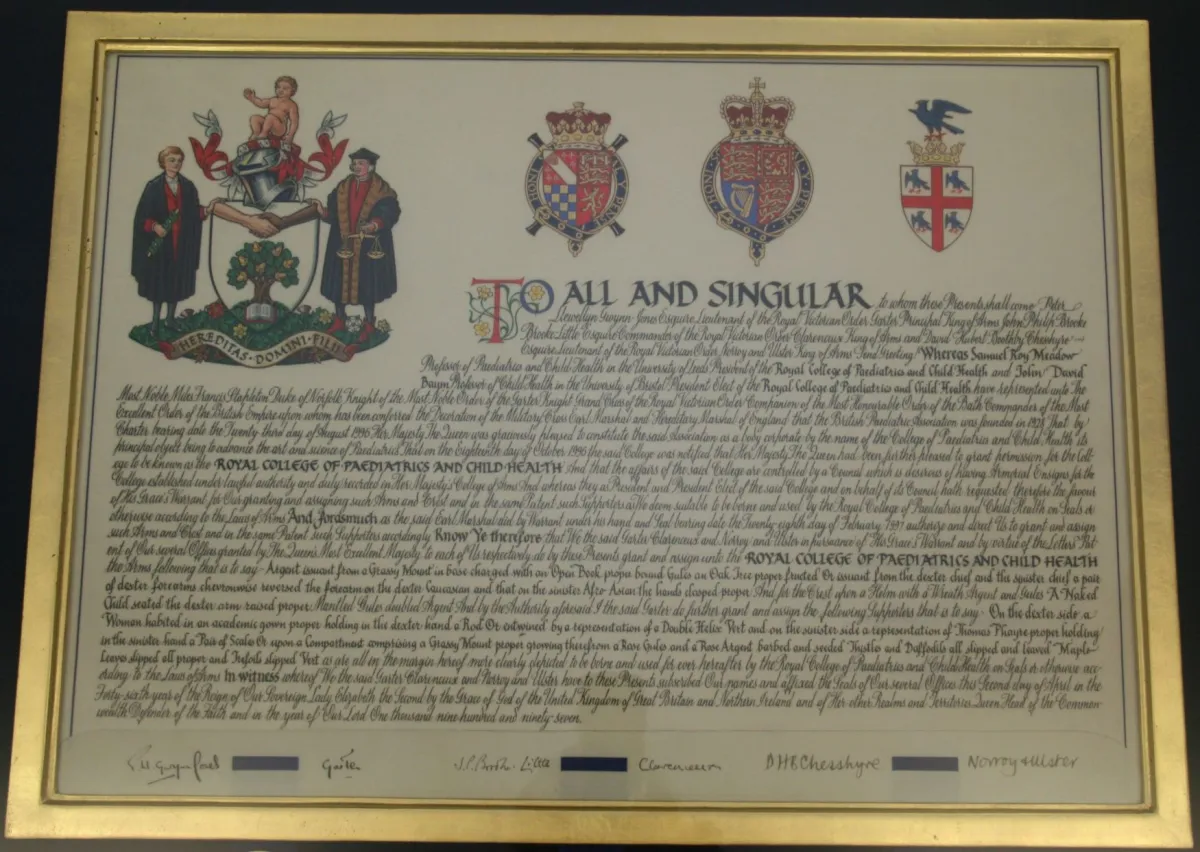
Since the Charter was granted the Royal College of Paediatrics and Child Health has grown to around 25,000 members in the UK and internationally. A copy of our charter can be viewed in the Members' Room at our offices in London.
You can learn more about the history of RCPCH. Our archives contain records of our history as the British Paediatric Association (BPA) and a Royal College, and of the history of child health. If you would like to access the archives, or you would like more information about our history and archives, please contact us at information.governance@rcpch.ac.uk.