

Photographed above: Jennie Ellul and Dr David Ryan accepting the 2025 PIER Award from President Steve Turner at our annual Conference
About our prize winner
Since 2022, young people, families, schools, and communities across Bradford have been working in partnership with Born in Bradford (BiB) on their project, Age of Wonder (AoW). AoW is one of the largest studies of adolescent health in the world, which at the time of the award had collected over 9,500 surveys, 2,200 motor and cognitive assessments, 2,100 bioimpedance measures, 3,000 blood pressure measures, 2,800 skinfold measures and 3,100 height/weight measures across 26 secondary schools. This number continues to increase as the project remains ongoing.
AoW is entirely co-produced and works primarily with six co-production groups, comprising young people, teachers, parents and community members. Key contributions of AoW co-production included setting research priorities, revising AoW questionnaires and study documentation, refining consent processes to ensure public acceptance, and presenting AoW findings via annual science festivals and co-authoring research publications. The team’s emphasis on co-production and engaging families in research secured their win of the PIER Award 2025.
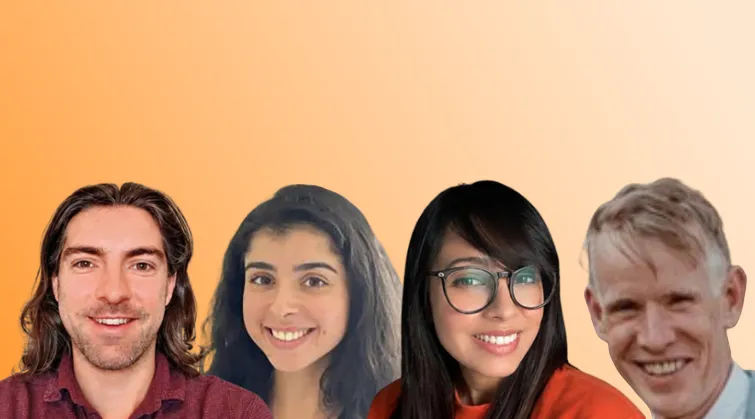
We spoke with Dr David Ryan and Jennie Ellul about the Born in Bradford: Age of Wonder project. Dr David Ryan is currently a Senior Research Fellow on AoW with time spilt between working on a school food project and leading work on co-production and engagement. Jennie Ellul previously worked as a Peer Research Assistant on AoW and is now a Community Engagement Officer for Yorkshire and Humber Secure Data Environment, where she supports the development of young people's advisory groups and organises events and workshops centred on patient and public involvement and engagement.
David and Jennie reflect on BiB: Age of Wonder, involving young people in research and why aspiring researchers should just give it a try.
What motivated your clinical research focus?
The motivation tracks with how Born in Bradford has developed over the years. In the early days, the focus was perhaps much more clinical, but as the programme has matured, there's been much more consideration of the wider determinants of health.
It's about thinking how we can engage local communities and use the city's data infrastructure to better understand people's health trajectories. That allows us to think more about preventing ill health and supporting positive outcomes, rather than only intervening once people need clinical care.
Ultimately, it's about prevention and health promotion, so that fewer people will require support at the clinical end of the pathway and, ideally so fewer people will need hospital treatment in the first place.
Thinking back to the start of your research journey, what inspired you to pursue research, and what continues to motivate you today?
Jennie Ellul: I think, initially, it was the opportunity itself that inspired me. Being given the chance to join the team was really exciting. The whole project and study were exciting to be part of, especially because Bradford is quite a small city, but the research has such a huge impact.
I really loved being involved in it. As often happens in research, though, contracts come to an end, and I eventually moved on.
My current role is a little different because I'm not directly doing the research. Instead, I'm talking to people about how they feel about their health data being used for research and capturing patient and public voices. It's a different side of research, but it's still about making sure people's views and experiences help shape the work being done.
Dr David Ryan: I think when I was a university student, doing student projects and that sort of thing, my initial motivation was the idea that one day you could get paid to pursue your interests and think about these complex, challenging questions that society is grappling with.
Now that I'm actually working in research, I still have that motivation. I'm still driven by the creative element of being a researcher and trying to tackle large, complex problems.
However, my motivation has shifted a little over time, or perhaps become more applied. I'm much more interested now in how we can do research that can actually be put into practice and gives us the best chance of having a real-world impact.
That's probably what motivates me most today, more so than purely methodological or theoretical research.
How do you involve children, young people and their families in your research and what impact has this had?
In terms of involving young people, that's something that's still very much ongoing. Within the secondary schools, we've had young people directly involved in co-designing the questions we ask and how we frame them. We also work regularly with a number of different patient and public involvement and engagement (PPIE) groups. They have had a direct impact on everything from study materials and questionnaire design through to dissemination activities. Some have even co-authored papers and presented research findings at conferences. It's been really rewarding to have that involvement throughout the whole process, from the early study design stages right through to dissemination.
On a broader level, a key part of the work has been our partnership with schools. We ask a lot of schools in terms of collecting data each year, and one of the things that has really enabled that has been making sure schools see value in participating. For example, after we collect survey data, schools receive a dashboard showing aggregated insights about their pupils, alongside comparisons with Bradford-wide data and national reference values.
One of the biggest things I've learned is just how important young people's voices are. It's always really interesting speaking to young people and hearing their perspectives, whether that's on something relatively simple or something more complex.
That has been a really important driver for the study and has helped maintain engagement from schools because they can see a practical benefit from being involved and receive useful information that they can use themselves.
As the cohort has grown older and begun to move beyond secondary school, we've also expanded our engagement into colleges, sixth forms and further education settings to maintain the longitudinal nature of the study. Young people from these settings have continued to contribute to the development of the project, including through co-production work to help shape our digital engagement approaches.
We are now moving towards app-based data collection through the BiB app. As young people leave school, their lives naturally become more varied. Some go to college, some enter employment, some leave Bradford and some stay. The app gives us a way of staying connected with them throughout this important period of early adulthood.
We're still learning as we go, but over the last six months we've worked closely with groups of 16 to 20-year-olds to review and refine our survey measures about the questions we ask during this transitional period. The aim is to make sure we're asking the right questions and capturing the experiences that are unique to this important transitional stage of life.
Since receiving the award, how has the research progressed? Have their been any new or additional projects?
There are currently two main strands of work.
One is the post-16 phase of the study and we're constantly adapting this work in response to the priorities of the young people involved. Throughout secondary school, mental health was a huge focus within AoW, and while it remains a major priority, as the young people are getting older we're now also looking more closely at transitions for example, within education, employment and apprenticeships. That has created a dual focus for the post-16 phase of the project. We're interested in understanding how we can best capture those journeys, and young people have been integral in shaping the questions we ask. They've helped us understand just how different people's experiences can be, and how major life events, whether that's changing schools or colleges, changes in family circumstances, or changes in their own health, can influence the pathways they take.
One thing that's come out quite strongly is the idea that "transition" maybe isn't the right word. As adults, we often think of transitions as gradual and phased, but many of the young people we've spoken to describe these changes as feeling much more abrupt, rather than gradual. Turning 16 often feels like a significant shift, and turning 18 feels like an even bigger one. Their experience is that these changes happen much more suddenly than adults sometimes perceive.
If you're working in health research, epidemiology or related fields, I think it's important to always keep improving people's health as your North Star. For me, patient and public involvement and engagement, co-production and working closely with communities are really valuable ways of staying focused on that goal.
The second strand is our work in secondary schools. We've built really strong relationships with schools over the years and AoW has become part of the school calendar for many of them. As a result of that, a number of schools have expressed a desire for the study to continue, so we've adapted our original plans and will continue collecting data in schools for at least the next two academic years.
At the same time, we're keen not just to describe problems, but to start looking at how we can make a difference. We want to move further into intervention-based research and school-based trials. The first of these will be the IRL trial, a social media restriction study that is due to begin in September 2026.
So we'll continue working closely with secondary schools, but with a greater focus on interventions and evaluating what works in practice.
What have been the key learnings or highlights from your research/work so far?
Jennie Ellul: One of the biggest things I've learned is just how important young people's voices are. It's always really interesting speaking to young people and hearing their perspectives, whether that's on something relatively simple or something more complex.
There's almost always feedback or insight that you hadn't considered. Even when you think you've covered everything and that something is straightforward or young person-friendly, they often come at it from a completely different angle and offer a perspective you hadn't thought of. It's a real breath of fresh air and, more importantly, it's incredibly valuable.
For me, one of the key takeaways has been that young people's voices are just as important as anyone else's and should always be considered when designing and delivering research.
More broadly, it was a really positive experience being part of the AoW team and working with David on the co-production side of the project. I was also involved in data collection with young people, which gave me a real insight into the practical challenges of working in schools. You quickly learn that things aren't always as straightforward as they may seem. Every school is different, every area has its own challenges, and school dynamics can vary quite a lot. Even when you think you've got everything planned, there are always things you need to adapt to along the way. That was a really valuable learning experience and something I'll definitely take with me into future work.
Dr David Ryan: I think Jennie's nailed it there because I'd say exactly the same thing. That's probably been the key learning for me, particularly through the PPIE work.
As a research team, it's about staying adaptive and staying flexible, being open and willing to change as young people's priorities change as they grow and develop.
My background is in diet and nutrition research, so I never imagined I'd end up working on a project exploring post-16 transitions, employment and education trajectories, but it's been a really rewarding opportunity. Particularly, as we are working on areas which have been identified as a priority by the young people and communities we work with, which makes the work feels even more meaningful.
These are really big, complex challenges, and we're not going to fix everything overnight, but because we've been genuine in our efforts to engage with communities, young people and schools, we can at least be confident that we're focusing on the issues that matter most to them.
We're not going to change everything overnight, but involving communities in that way gives us the best possible chance of making a meaningful difference.
What advice would you give to aspiring researchers starting out in this field?
Dr David Ryan: I'm probably biased, but I think applied research is the best kind of research.
If you're working in health research, epidemiology or related fields, I think it's important to always keep improving people's health as your North Star. For me, patient and public involvement and engagement, co-production and working closely with communities are really valuable ways of staying focused on that goal.
As academics, we can sometimes get distracted by things like REF cycles, publications, impact factors and journals. Those things are important, of course, but ultimately we want our research to have a tangible impact and make a real difference to people's lives. So my advice would be to keep that as your guiding principle throughout your research career.
I'd also say, just give it a go. One of the really positive changes in research is that you don't need half a dozen degrees to get involved anymore.
In our team alone, we have people from community, medical and clinical backgrounds, former teachers, former marketing professionals, and people who first got involved through a PPIE panel or community group before going on to take up paid research roles.
There are now lots of different routes into research. If you're interested in it, don't feel that you need a particular set of qualifications or titles before you can contribute. Even if you're part of a PPIE panel, you're already playing a direct role in the research process. You can do really meaningful, impactful research from all sorts of backgrounds and disciplines.
Jennie Ellul: I'd also say it's important to keep an open mind. I think researchers can sometimes think quite rigidly about things, focusing on what model they're going to follow or what methodology they're going to use. Then, if something changes or a PPIE member says, "Actually, I don't think that's going to work," it can feel like a catastrophe and that the whole plan has fallen apart.
Keeping an open mind is really important. Research doesn't always go exactly as planned, and sometimes the best ideas come from being willing to adapt and listen to different perspectives.
I'd also encourage people to experience research for themselves, because doing research in practice is very different from studying it at university. A lot of people think of research as SPSS, literature reviews and the more exhausting processes that they encounter with university projects, and that can put people off considering it as a career, but actually being involved in research and seeing the impact it can have is a completely different experience, and it's incredibly rewarding.
I always used to think, "I'm terrible at research," but I think until you actually experience it and get involved, you don't always realise how interesting and exciting it can be and I love it.
Even something like joining a panel or an advisory group can open up lots of opportunities. Being involved in research often leads to more opportunities to get involved, so it's a really good place to start if it's something you're interested in pursuing as a career.
If you could give research a superpower, what would it be and why?
Dr David Ryan: I'd probably choose the super speed of The Flash.
Research is notoriously slow, so if we could maintain the same quality and rigour while having faster turnarounds and being more responsive, I think it would make research much more impactful.
Jennie Ellul: I'd choose some kind of positivity wand, although I'm not quite sure what superpower that would be!
I feel like when research achieves something really positive or has a great impact, it's often the negative stories that get the most attention. I'd love a superpower that could flip that around and shine a light on the positives.
It would be great to see more people engaging with the positive outcomes of research and the real benefits it brings, rather than always focusing on the negatives. I think that could have a real domino effect and encourage even more interest and involvement in research.
Listen out for our upcoming podcast series from the RCPCH Trainee Research Network all about child health research, starting on 7 October. Subscribe to RCPCH Podcasts on Apple Podcasts, Spotify or wherever you listen to your podcasts.