

Challenges facing services
Remote and rural hospitals in the UK are generally defined by their non-urban location providing services for widely dispersed populations of varying size, socioeconomic status, age and health needs. While relatively distinct in terms of services available and ways of working, they share factors that can prove a disadvantage when compared to more centralised district general hospitals or teaching hospitals.
Cost, patient population, regional health inequalities and rising health complexities, combined with a reduced ability to attract workforce and limited access to resources, can impact the level of service that remote and rural hospitals are able to provide1. Crucially, these challenges are escalating, exacerbated by the aftermath of the COVID-19 pandemic and cost of living crises.
Compared to their urban counterparts, remote and rural areas tend to have a lower population density and size, with service users more widely dispersed across the region. However, there is usually less access to or fewer available services especially when it comes to those on the more specialist end, most of which tend to be provided at larger units. For example, 55% of rural households are based within 8 km of a hospital compared to 97% of urban households 2, 3 .
Rural and coastal areas also present highly complex scenarios when it comes to wealth and its distribution. For example, Cornwall, despite considerable pockets of wealth, has some of the worst levels of poverty in Europe with just one hospital serving in the area4.
Furthermore, with an average 17% of the population over 70 years old, compared to 12% elsewhere5, there is a demand for services dealing with complex, co-morbid disease. This demand on finite resources is likely to impact the services and staffing available for children and young people, with specialist services stretched.
- Recurring challenges
The 2017 Nuffield Trust survey 6 identified an exhaustive list of recurring themes that can be experienced by remote and rural hospitals including:
- mismatch between patient need and acute service provision
- increasing service complexity
- insufficient numbers of staff with an appropriate skill mix
- provision of safe services for patients with life-threatening conditions
- out of hours cover
- withdrawal of specialists from the provision of general medical cover
- changes to the role of clinical staff and job design
- delays in diagnosis.
- Service provision
With disproportionate levels of health inequalities 7, there is a need to adapt ways of working while coping with workforce shortage solutions, which has an associated cost. The Nuffield Trust demonstrated that in rural areas the costs of delivering healthcare can be elevated for a number of reasons including employing locums and ‘broader operational costs and productivity challenges’ due to location. This is particularly true in cases where multi-disciplinary staff are required to help clients with complex needs and acute services alongside mental health and community services; a situation that is again only worsening as the prevalence of complex and longstanding health conditions continues to rise.
Many remote and rural hospitals also find themselves facing elevated costs due to the absence of economies of scale 5. Ambulances are also more expensive to run in rural areas particularly in terms of response time standards. However, funding streams do not tend to account for many of these ‘hidden costs’ with many remote and rural hospitals penalised by payment-by-results funding models.
Service is also heavily impacted by workforce shortage. Generally, rural and remote units operate with smaller teams, for example, in June 2020, workforce in remote trusts grew at 5% compared to 8% for rural trusts 5. This leaves services more vulnerable to staff sickness (as evidenced during the pandemic) and parental leave, which in turn has a knock-on effect on training provision and overall staff wellbeing and burnout, potentially leading to higher turnover. It is also increasingly difficult to make efficient use of siloed staff, where flexibility is required, placing additional pressure on niche services 8. In fact, there has been a noted increase in reliance on locums and agency staff to fill rota gaps with 8% of remote trusts’ total spending on staff going towards bank and agency staff compared with 6% elsewhere 5.
- Workforce
Remote and rural hospitals also struggle to attract appropriately trained doctors and keep them in post. Larger hospitals, particularly those in urban centres, have a superficial prestige given their location and other incentives such as the option of private work, less social isolation and more cultural opportunities 9, 10 . With the location of the larger teaching hospitals, resident doctors are more likely to be located in urban centres, attracted by the option of building expertise while remote and rural hospitals generally remain low on the priority list.
Locum posts at remote and rural hospitals may be used by those recently qualified or resident doctors until a position becomes available at a more central location.
What the data tells us
We explored paediatric service provision and activity in remote and rural hospitals across the UK, using information collated from 105 hospitals. These included 24 trusts in England, 12 Health Boards in Scotland, five Health Boards in Wales and four trusts in Northern Ireland.
- Hospitals
Of the 105 hospitals included in this report, nine were considered very remote with no large centres easily accessible. These were mainly in the Scottish Islands but also included Cornwall, which is 80 miles from the nearest centre in Plymouth.
Similarly, 11 hospitals were located on islands with difficult driving conditions and/or requiring ferries or other modes of transportation to reach the nearest large centre.
- Outpatient and inpatient care
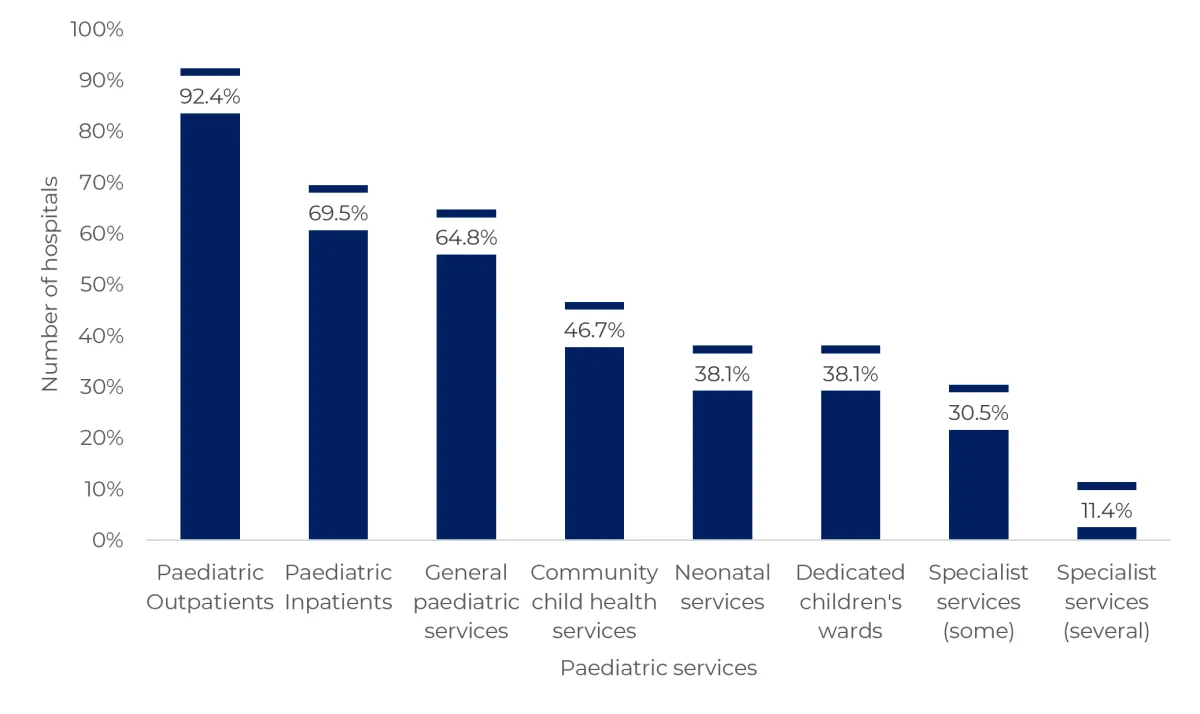
Across all four nations, paediatric outpatient and inpatient units were most widespread, but there were eight units that did not provide any outpatient services and 32 that similarly had no inpatient services.
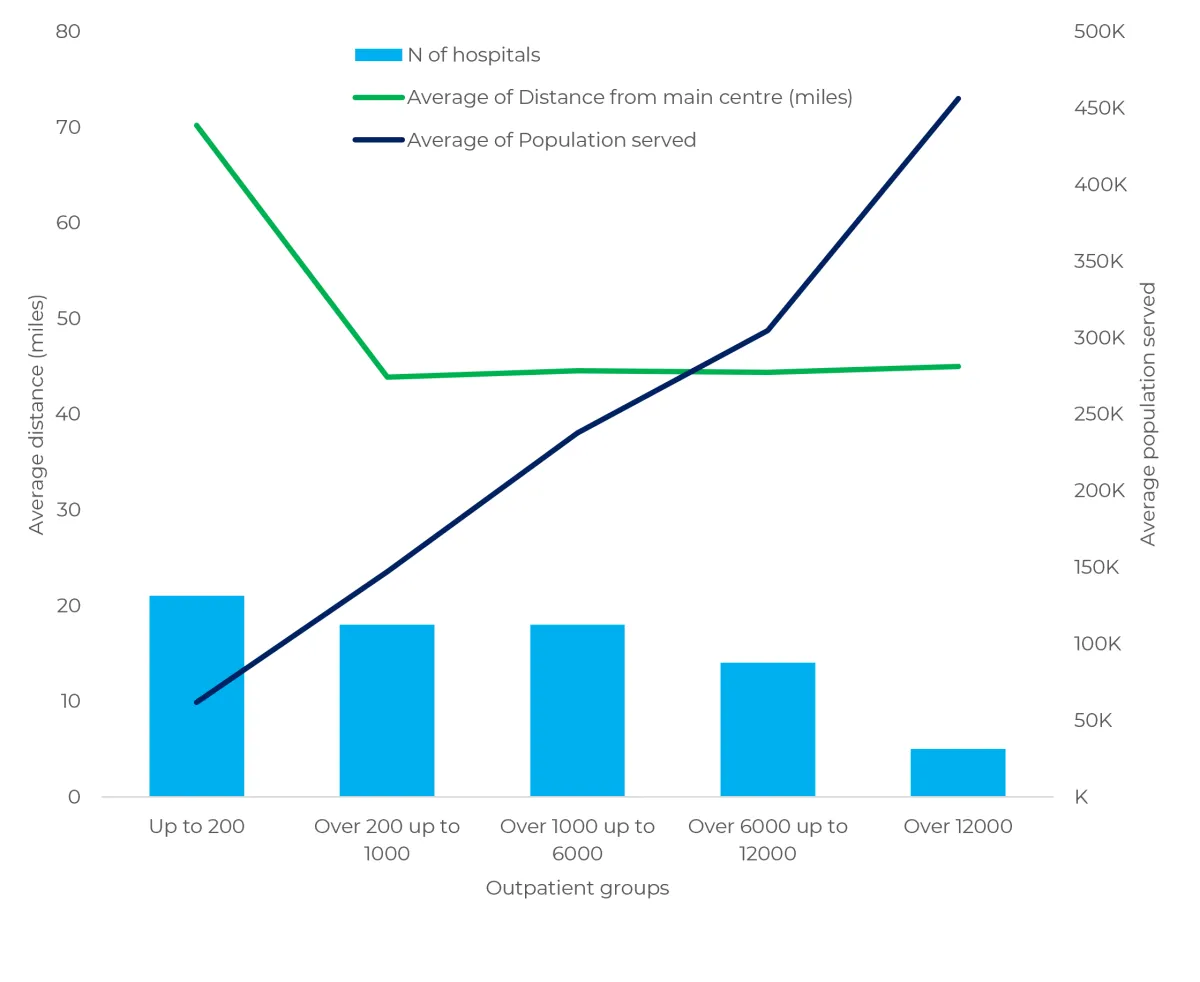
There were 469,617 outpatient attendances across 92 remote and rural hospitals in 2023-24, with around half (48.4%) seeing up to 1,000 outpatients and over a quarter less than 200. (Single patients may attend multiple units at multiple sites, which may artificially inflate figures.) Hospitals with the lowest outpatient attendance (up to 200) were generally the furthest away from the next large centre, serving the smallest population. For all other groups there was little variation in terms of distance (ranging from 43.9 to 45 miles).
There were 193,421 combined paediatric inpatient and day cases across 70 hospitals for 2023-24. In addition to 32 hospitals with no inpatient service, 19 had up to just 100 paediatric inpatients (mainly in Scotland). The majority of hospitals had either up to 100 inpatient cases (27%) or between 3,000 and 6,000 inpatient cases (26%). Similar to outpatients, the hospitals furthest away from the nearest centre were also the ones providing the smallest number of paediatric inpatient admissions.
- Emergency care
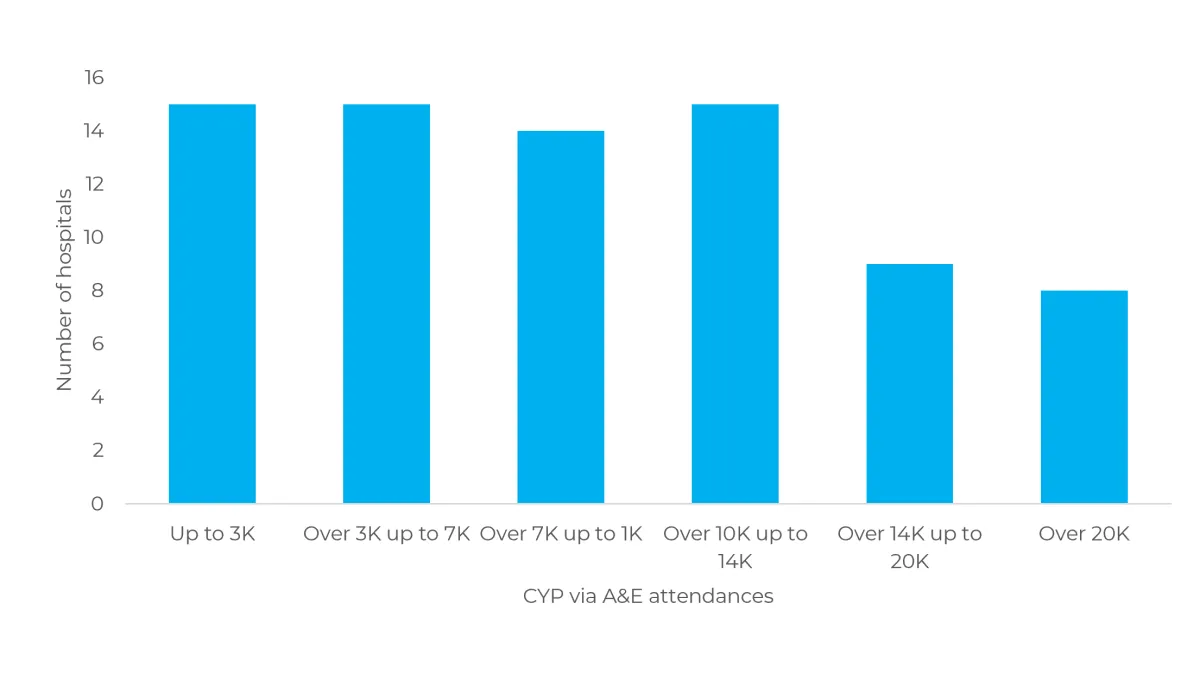
Of the 105 units included in this report, 88.6% of hospitals had an Emergency department, two-thirds of which were Type 1. This highlights the fact that over 30% of communities served by remote and rural units did not have access to Type 1 Accident & Emergency (A&E) facilities, while over 10% of units had no A&E services at all.
In 2023-24, attendance at Type 1 A&E (63 hospitals) was 696,094 with Type 3 (13 hospitals) seeing 50,088 children and young people, as shown in the below chart.
- Paediatric beds
Half of hospitals with available data did not have dedicated paediatric beds, while the remaining 34 units had an average of 26 beds (ranging from 1-60), ten of which had up to 15 paediatric beds, 14 between 16 and 30, and ten over 30. This trend was largely consistent across all four nations.
It is important to note these figures include not only inpatient beds, but also neonatal cots and high dependency units.
- Distance from larger centres
Given that many of the hospitals did not have full-service provision, we explored how far patients must travel in order to receive services available only at larger hospitals, measuring distance in miles.
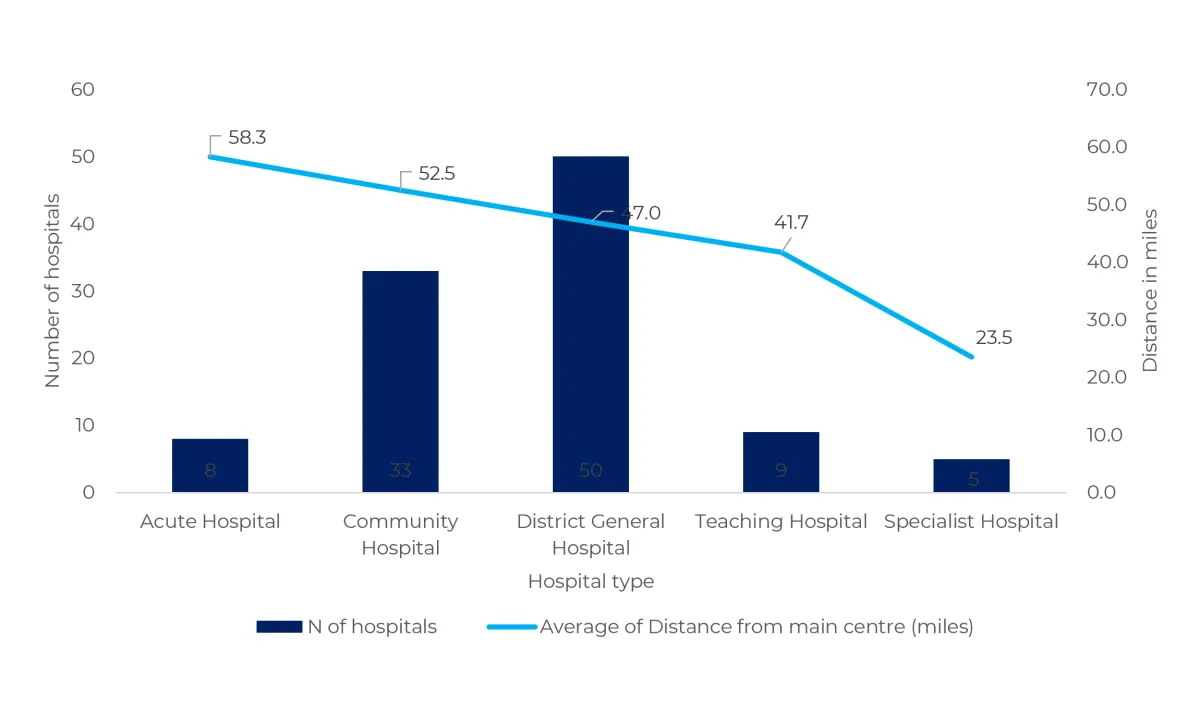
When looking at distance by nation, hospitals in Scotland had the highest average distance from the nearest centre at 56.8 miles, followed by Wales at 47.7 miles, England 42.9 miles, and Northern Ireland 38.2 miles.
On average acute hospitals and community hospitals were over 50 miles from the nearest centre, whereas district general hospitals and teaching hospitals were between 41 and 47 miles. Specialist hospitals were the ‘least remote’ being on average 23.5 miles from the nearest centre.
Case studies
We approached three Trusts/Hospitals in remote and/or rural locations across the UK. We characterise each hospital in terms of their services and then discuss the collective problems that they face due to their remote and rural locations.
- University Hospitals of Morecambe Bay
Population and geography
University Hospitals of Morecambe Bay NHS Foundation Trust (UHMBT) provides community and hospital paediatric services in the Morecambe Bay area with three key hospital sites: Furness General Hospital (FGH), Royal Lancaster Infirmary (RLI) and Westmorland General Hospital (WGH). It provides services for patients across South Cumbria and North Lancashire where babies, children and young people (BCYP) form 15.8% and 15.5% of the total population respectively.
Almost half the population of both South Cumbria and North Lancashire are living in the most deprived areas (top five percentiles). The closest tertiary hospitals are over an hour away: RLI is 50-60 miles from RMCH and Alder Hey, while FGH is 100 miles from both.
Furthermore, there is no PICU, NICU or tertiary children’s hospital in either Cumbria or Lancashire.
Services
Acute inpatients services (including elective surgery) and Emergency Department (ED) facilities (co-located with adults) are available at both RLI and FGH; there is an Urgent Treatment Centre (UTC) at WGH, but no paediatric inpatient services.
In terms of neonates, there is a Special Care Unit at FGH, a Level 2 Local Neonatal Unit (LNU) at RLI, and a small midwifery-led unit at WGH with a combined delivery rate of about 2,200 babies a year.
Outpatient clinic services are available at all three sites, but at WGH these are held in adult clinic spaces and are very infrequent.
Community Paediatric Clinics in North Lancashire take place at Longlands Child Development Centre and a number of smaller sites across the region, while in South Cumbria they are the responsibility of the North Cumbria Acute Trust.
Patients are transferred from one inpatient unit to the other when there are either staffing or bed space challenges, while staff may travel between sites to provide safe staffing-level cover.
Outsourced services are provided by visiting specialists from the closest teaching hospitals - Royal Manchester Children’s Hospital (RMCH) and Alder Hey and include genetics, general surgery, orthopaedic surgery, cystic fibrosis, endocrinology, nephrology, neurology, allergy and cardiology. There are also regular virtual MDT clinics for neurology, severe asthma and immunology / rheumatology with relevant teams at both hospitals. Patients requiring Level 2 High Dependency Unit (HDU), PICU, or NICU are transferred to more centralised hospitals with the closest PICUs at RMCH and Alder Hey and the closest NICUs at Burnley and Preston.
The Trust tries to utilise virtual video and telephone clinics where possible to help with travel issues and hosts MS Teams clinics at either FGH / RLI connecting with the tertiary units to prevent families having to travel to either Manchester or Liverpool.
Integrated care
UHMBT paediatric services could be significantly helped by using integrated care, though close liaison and collaboration with both North West Ambulance Service and primary care colleagues is essential.
UHMBT also offers advice and guidance via email as well as a robust on-call service where referrers can speak 24/7 to the on-call consultant. They have developed unique relationships with Intergrated Care Communities (ICC) colleagues and have lead paediatricians for some locality areas, for example, CP is the local link paediatrician for Carnforth ICC and leads on bimonthly MDT meetings to discuss high service user patients with chronic illness, areas of unmet need and how to prevent unnecessary acute attendances.
There is good support from the community paediatric nursing team with the development of a robust virtual ward pathway to try and decrease footfall through Same Day Emergency Care (SDEC) and Patient Assessment Unit (PAU) departments while also helping swift discharges especially during winter pressure periods.
Facing the Future standards
There is a lack of understanding around full compliance with Facing the Future standards. With three sites it is hugely expensive and inefficient from a financial perspective and the remote and rural nature hugely impacts on the ability to comply with standards. The rurality means that UHMBT are served by different local authorities, with differing policies and guidelines.
- Are consultants job planned to be on site out of hours: For RLI between 04.00 and 21.30 Monday to Thursday, and between 09.00 and 15.00 Saturday and Sunday; for FGH at weekends only.
- Do you have consultant presence at handovers: Consultants are present at all morning handovers 7 days a week and at all 16.30 handovers Monday to Friday. Attendance via Teams at 21:00 handovers is optional
Technology
The trust is a high user of MS Teams for handovers and teaching both locally and between FGH and RLI. UHMBT tries to rationalise the need for face-to-face appointments, instead utilising NHS Attend Anywhere and virtual video and telephone clinics as much as possible.
Recruitment
UHMBT tries to ensure that all resident doctors are well supported and receive high quality supervision. Being a consultant delivered service, it tries to develop their resident doctors in-house, for example, allocating resident doctors a second placement during training, while also supporting ST7s in stepping up to consultant level work and including them in management meetings.
- Balfour Hospital, NHS Orkney
Population
The Balfour Hospital in Orkney serves a CYP population of about 4,000 (17.9% of the total population) but does not have a full-time on-site consultant paediatrician. Instead, paediatric services are provided by visiting paediatricians, local community teams and GPs.
Services
There is an Emergency Department that handles paediatric needs, while available services tend to be limited to paediatric physiotherapy, speech and language therapy, dietetics and audiology with most therapy sessions and assessments centred at the neighbouring Peedie Sea Children’s Centre.
Outpatient clinics are provided by visiting paediatricians from the Royal Aberdeen Children’s Hospital (RACH) for services including ENT, allergy, orthotics, wheelchair, ophthalmology and CAMHS. All acute paediatrics, neonatal, MRI, CT, spinal, respiratory, cardiology and rheumatology services, however, are outsourced to the closest DGH/teaching hospital/acute hospital which is about 250 miles by ferry or plane.
Similarly, in Orkney, all acute paediatrics, neonatal and most other services are outsourced to the closest hospital 250 miles away and which requires travel by ferry or plane. This causes considerable issues given limited transport services and inclement weather, with some outpatient appointments requiring an overnight stay. There can also be delays with tertiary centre discharge information leading to practical issues and potential gaps in care.
Services such as telehealth may also be difficult to manage given that children still need to be admitted to the main hospital.
Integrated care
There is currently no acute or community children’s nurse service in Orkney.
Facing the Future standards
- Are consultants job planned to be on site out of hours: There is no OOH consultant cover
- Do you have consultant presence at handovers: There are no paediatricians employed at the Balfour Hospital.
Technology
The Balfour Hospital organises appointments at Emergency Departments and GP surgeries that are equipped with monitors for video calls with specialist services. It also readily holds virtual multi-agency meetings to discuss, for example, complex children as part of a network of specialist Allied Health Professionals.
Recruitment
The Balfour Hospital finds recruitment challenging. NHS Orkney is currently developing a training centre within the Balfour Hospital to enable local training, particularly for clinical skills.
Currently, links to NHS Grampian ensure that staff can maintain their skills, sharing the costs of online training with Shetland and the Western Isles where possible.
- Bronglais General Hospital, Wales
Population
Bronglais General Hospital (BGH) provides services for about 10,000 children up to 16 years of age, about 14% of the total population. It is one of the highest areas of deprivation in Wales with 27% of children living in poverty.
While the hospital is fundamentally resourced for the resident population, seeing children from out of area during holiday periods can present a greater challenge for a hospital that is already relatively minimally staffed.
Services
Services provided by BGH include acute general paediatrics, paediatric respiratory (high flow as well as nasal Continuous Positive Airway Pressure), paediatric cardiology, paediatric gastroenterology, paediatric allergy, paediatric epilepsy at DGH level and initial management for neutropenic sepsis in paediatric oncology. It also provides acute surgical care for children above five years while younger children are transferred to Glangwili Hospital in Carmarthen, which is about 50 miles away.
Only very young children tend to be referred to UHW Cardiff paediatric surgical team. It has one high dependency bed as well as day case facilities for general investigations/oral food challenge/endocrine investigations.
For neonates, BGH only accepts babies of 36 weeks but has managed deliveries as low as 24 weeks. It can provide nasal CPAP, high flow, intubation and ventilation, but generally only provides stabilisation prior to using neonatal transport services to transfer babies to the nearest level 2 and 3 neonatal units.
In terms of community services, BGH provides ADHD and ASD assessments. Neurodisability services are shared between consultants with help from paediatric physiotherapy, occupational therapy, speech and language therapy and orthotics while community ENT and ophthalmology services are available locally. The children disability centre is situated within a mile of the hospital with a specialist health visitor providing support for neurodisability and severely autistic or ADHD children.
One part of the CAMHS team is based in Bronglais, but all referrals are triaged centrally in Carmarthen. Psychology services are very limited and referrals especially for children and young people with chronic disease or behavioural support are considered on a case-by-case basis but usually rejected due to lack of staffing. The anorexia service has been continued with local support from the primary mental health team and CAHMS dietician but there are no specialist diabetes nurses (although community nurses provide support) and no paediatric obesity service within the region.
Tertiary services are largely outsourced to University Hospital Wales (UHW) in Cardiff. This includes respiratory, endocrine, gastroenterology, immunology, nephrology and neurology services with paediatric cardiology outsourced to Alder Hey. A paediatric allergy service is provided by two consultants within the health board including one from BGH; endoscopy is available at a drive through service in Swansea; dermatology services are located 70 miles away and acute ENT and ophthalmology 50 miles away.
The trauma network coordinates close discussion amongst tertiary orthopaedic/surgery/ neurosurgery for babies, children and young people requiring input following Trauma or with an acute neurosurgical issue. Likewise, the nearest paediatric tertiary centre for BGH is UHW Cardiff which is 125 miles from the local region with neonatal services provided by either Swansea (75 miles away), Newport (140 miles away) or Cardiff.
Integrated care
BGH books routine services to coincide with outpatient visits, provides monthly outreach clinics and uses the local transport team (CHANTs) to transfer babies within South Wales when necessary. Ambulance control does have limitations, but the response car is adequate in cases of urgent life-threatening issues.
Facing the Future standards
- Are consultants job planned to be on site out of hours? Consultants are not on site during OOH but can be reached within 20 minutes or by phone. Due to a lack of Tier 2 resident doctors, consultants often need to step down with another consultant as back up.
- Do you have consultant presence at handovers? Consultants are present in person in the mornings and by telephone in the afternoon.
Technology
BGH relies on both telephone and Consultant Connect for certain services (mainly dermatology) and MS Teams for neonatal discussions between the hospital, transport team and tertiary centre.
FaceTime and WhatsApp video conference calls with tertiary colleagues have also been used.
Recruitment
BGH finds recruitment challenging often leading to short to long term vacancies and currently there are no resident doctors. BGH is looking to Bangor medical school to provide resident doctors in the next five to 10 years.
Recommendations for remote and rural hospitals
- Facilities and digital
- Mandate the need for fit-for-purpose paediatric Emergency Department services at both acute inpatient sites delivered by an appropriately trained workforce.
- Implement a Hospital at Home service supported by the local district general hospital.
- Ensure acute and outpatient facilities are specifically designed or easily adapted for babies, children and young people.
- Increase connectivity by reducing isolation, accelerating uptake of digital health solutions and improve digital health skill training for clinical workforce. Members can access our solutions catalogue and skills roadmaps on the Digital Health Hub.
- Staffing: recruitment, upskilling and retention
- Improve rural medicine training to include more specialist knowledge, while also rotating staff to busier units to keep skills and knowledge up to date.
- Support/develop paediatric training in places where there have not been any paediatric resident doctors for over 25 years.
- Make better use of existing resources and invest in the upskilling of existing staff.
- Create a network of paediatricians to support remote and rural hospitals.
- Fund/support placements for staff to gain experience, teaching and network with tertiary/specialist hospital.
- Fund/support placements for staff including ST7 resident doctors to gain experience working in remote and rural areas.
- Implement working arrangements at the ‘whole-hospital level’ - inter-disciplinary and team-based, shifting from models arranged around professional boundaries to those are based around skills, expertise and experience.
- Understand benefits of specialist services and recognise importance of generalist skills.
- Implement regular simulation training (joint education and paediatrics).
- Strategic planning in delivery of integrated care
- Liaise with executive teams to explain challenges facing remote and rural paediatric teams.
- Ensure budgets for paediatric services take into account the complexity and scope of care delivered by a paediatric trained multidisciplinary team for safe minimum staffing levels and skill mix at all times.
- Plan remote and rural hospitals as part of a wider system, with stronger links to local services and support from other hospitals.
- Make improved continuity of care a key objective when planning services.
- Organise systems and processes with the intention of delivering appropriate care as quickly as possible.
- Ensure each step in the care pathway adds value, focus on removing duplication and ensuring rapid testing to allow patients to be put on the most suitable pathway.
- Differentiate hospitals by capacity for each stage of care on the pathway including in-hours and out-of-hours models of care.
- Ensure capability for acute hospitals to deal safely, quickly and expertly with all patients for at least the initial hours of care, with main centres providing rapid and effective support.
- Implement greater integration with local community and primary care services, allowing for a central anchor service (acute hospital) that provides specialised treatment and other necessary services plus a broader range of less specialist care in peripheral sites/community care.
- Implement greater integration into networks of specialist care, to allow management and transfer of the sickest patients.
- Shift from an ‘all or nothing’ acute service provision to a more ‘modular’ approach.
- 1
Rethinking acute medical care in smaller hospitals
L.Vaughan et al., 2018
- 2
Public Health England. Health and wellbeing in rural areas. 2017.
- 3
National Centre for Rural Health and Care. APPH Rural Health and Care,. 2022.
- 4
Glass J. BC, Chapman C., . Children and young people and rural poverty and social exclusion: A review of evidence. Scotland's Rural College; 2020.
- 5a5b5c5d
Nuffield Trust. Rural, remote and at risk: Why rural health services face a steep climb to recovery from Covid-19. 2020.
- 6
Collins BE, N., Imison, C. Vaughan, L. Rethink Acute Medical Care in Smaller Hospitals. 2018.
- 7
Whitty C. Health in Coastal Communities. 2021.
- 8
Vaughan LE, N; Imison, C; Collins, B. Rethinking Acute Medical Care in Smaller Hospitals. London: Nuffield Trust; 2018.
- 9
Vaughan LE, N;. The problems of smaller, rural and remote hospitals: Separating facts from fiction. Future Healthcare 2020;7(1):38-45.
- 10
NHS Providers. Challenges faced by trusts operation in rural areas.