

We thank the College members nominating individuals for Honorary Fellowship.
Our Honorary Fellows in 2026 are (in alphabetical order) - scroll down to read their citations, provided by the nominators:
- Professor Mitch Blair
- Dr Sue Broster
- Dr Matthew Clark
- Dr Jennifer Evans
- Dr Helen Fardy
- Professor Piyush Gupta
- Dr Elizabeth Marder
- Dr Vasanta Nanduri
- Associate Professor Arun Neopane
- Professor Sir Andrew Pollard
- Dr Doug Simkiss
Professor Mitch Blair
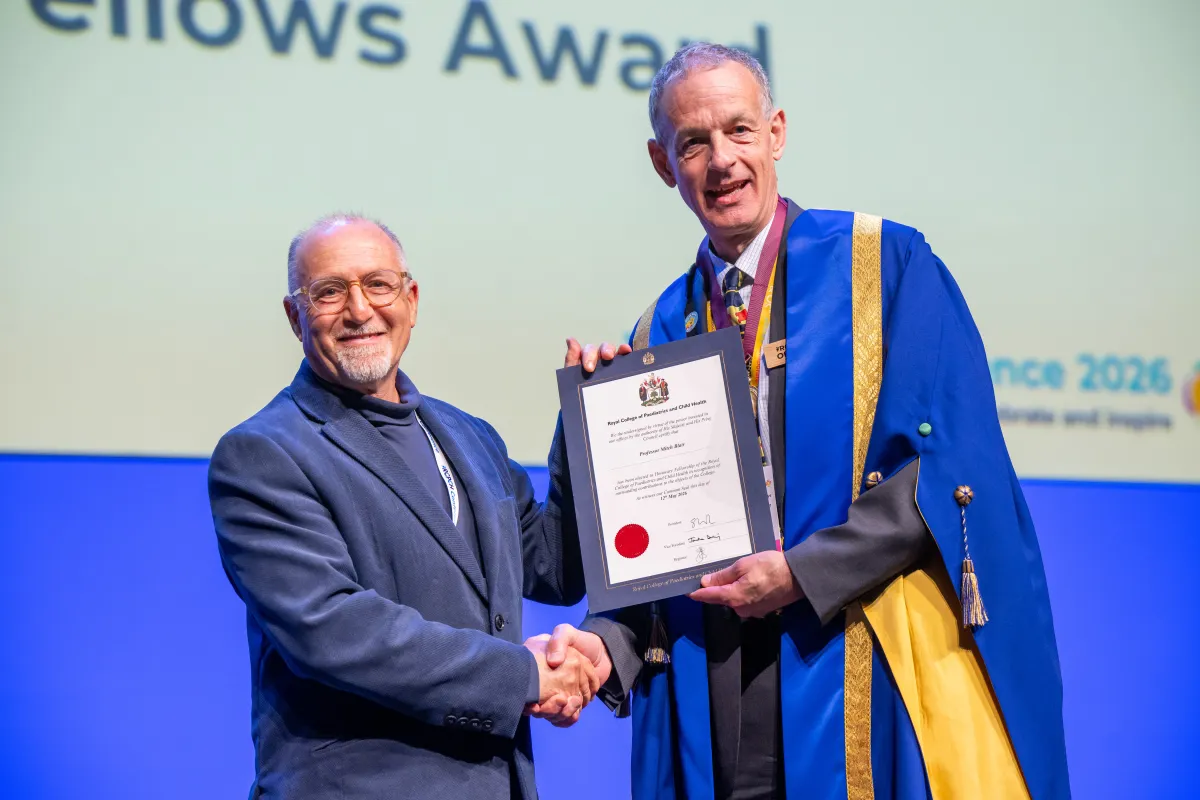
Professor Blair has made outstanding contributions to child public health over four decades in the UK and internationally, particularly across Europe. His clinical, academic and teaching career has spanned multiple posts at hospitals in London, as well as Australia and Macedonia. His work has led to major advances in evidence based child health policy, healthcare utilisation, vaccine uptake and preventive programmes, including a national Vitamin D campaign while volunteering as the College’s first Officer for Health Promotion.
He co-authored the Manual of Community Paediatrics, the first international textbook in child public health, and has published over 200 peer reviewed papers supported by £7 million in research funding. Mitch is now Emeritus Professor of Paediatrics and Child Public Health at Imperial College London, where he remains active in research focused on perinatal and integrated care in disadvantaged communities.
Alongside research, Mitch has demonstrated deep commitment to service delivery, education and training. In Nottingham, he developed innovative patch based community paediatrics and a multidisciplinary registrar training model adopted nationally. Internationally, he has advised WHO and UNICEF, revised undergraduate curricula, and supported health system development. His leadership, clinical advocacy and dedication to education have left a lasting legacy in child public health.
Dr Sue Broster
Dr Broster is a Consultant in Neonatal Intensive Care with the Paediatric and Neonatal Decision Support and Retrieval Service (PaNDR) and Chief Medical Officer at Cambridge University Hospitals NHS Foundation Trust. She provides strategic clinical leadership across patient safety, quality, and medical workforce, and has extensive experience in clinical governance, service improvement, medical education and research.
She has also held senior executive responsibility for innovation, digital, and improvement, and continues to champion the use of digital and system-wide collaboration to enhance care and outcomes.
She has a longstanding commitment to both paediatrics and global health working in countries as diverse as South Africa, Guyana, Botswana and with the RCPCH neonatal programme in Myanmar as the recently demitted RCPCH Global Officer.
Dr Matthew Clark
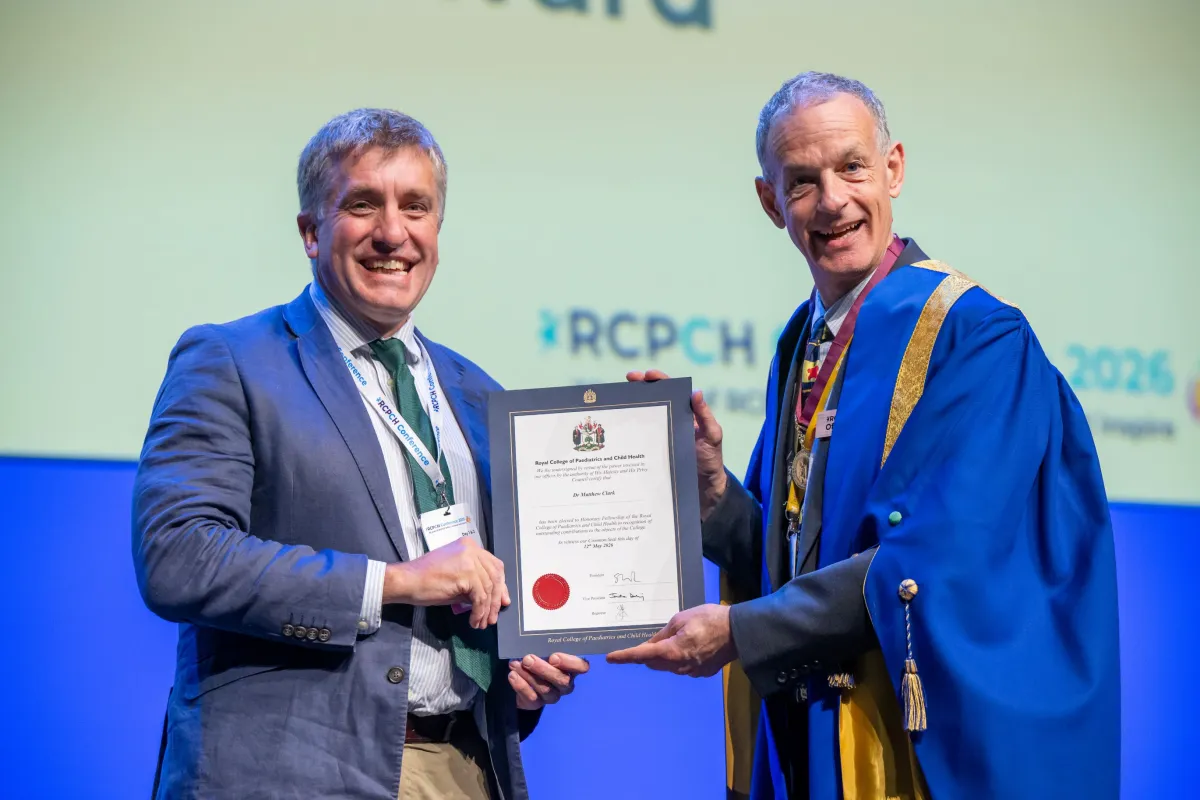
Dr Clark is a Consultant Paediatrician and Specialty Lead at East Sussex Healthcare NHS Trust. In March 2025, he demitted from his role as NHS England National Specialty Adviser for Children and Young People, a position he took up at the outset of the SARS CoV 2 pandemic. Dr Clark played a key role in shaping national policy for children and young people; he chaired alternate monthly meetings of clinical leads across NHS England and served as Deputy Chair for the weekly national child health update meetings.
Matthew was a member of the governing body of NHS Camden Clinical Commissioning Group and Clinical Lead for Admission Avoidance within the North Central London Sustainability and Transformation Partnership/Integrated Care System.
As part of his NHS England work, Matthew sat on the Paediatric Early Warning Systems Delivery Board and the Programme Advisory Board for the NIHR Child Health and Maternity Priority Programme. He has published eleven academic papers.
Matthew has worked closely with the College, providing thoughtful advice and constructive challenge. He has been a valued stakeholder on issues including pandemic response, RSV vaccination policy, and tobacco and vaping legislation, consistently engaging with insight, good humour, and commitment.
Dr Jennifer Evans
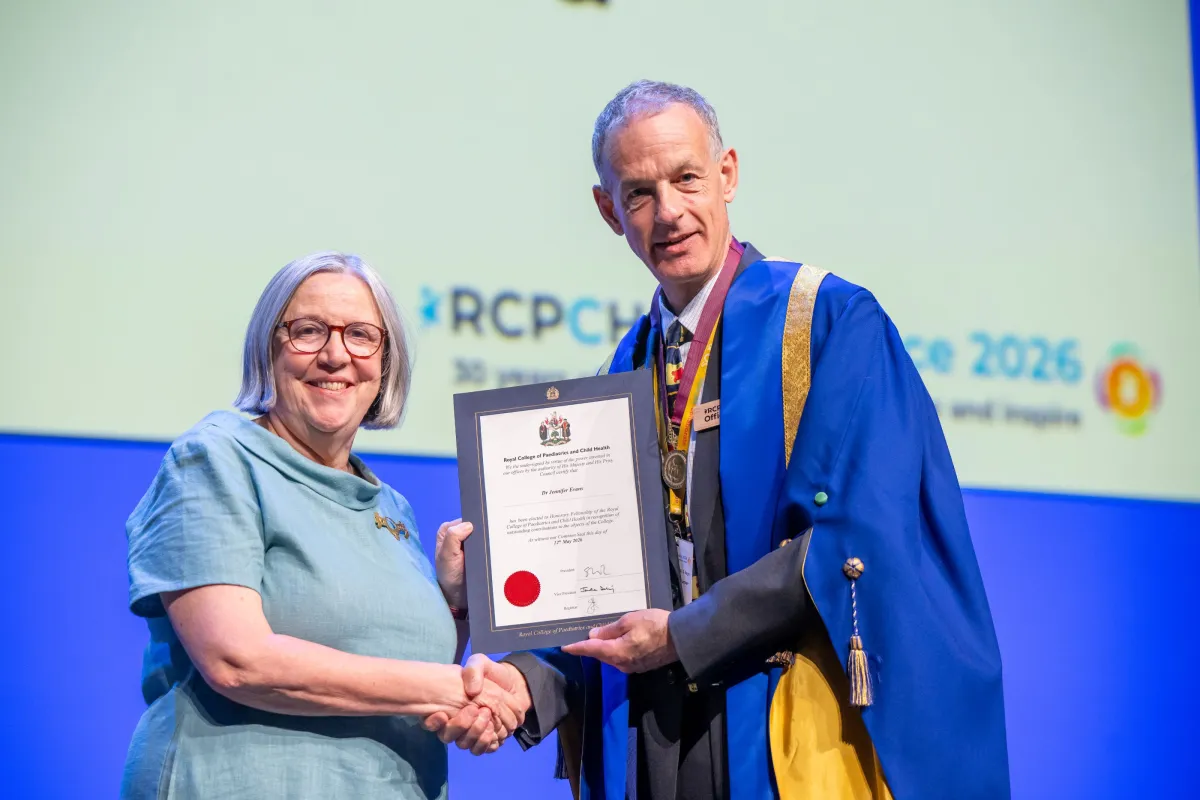
Dr Evans is a highly respected consultant paediatrician who has dedicated her career to improving the health and wellbeing of children and young people across Wales. She works at the Children’s Hospital for Wales with specialist interests in paediatric immunology, infectious diseases and palliative care. Since her appointment at the University Hospital for Wales in 2008, Jennifer has been instrumental in developing specialist services, including establishing and leading the infectious diseases and immunology service for Wales, often with limited resources. She also founded an antenatal infectious disease service, developing clear pathways that have significantly improved care for vulnerable infants and families.
Jennifer has played a pivotal role in setting up the High Consequence Infectious Disease Unit at UHW and was central to securing its long-term funding and expansion. She has also developed Wales-wide pathways for children and young people with HIV and established outreach clinics across South Wales. Most recently, she was instrumental in securing funding for the UK’s first SWAN (Syndrome Without a Name) Clinic in Wales, where she serves as paediatric lead.
Alongside her clinical work, Jennifer has made substantial contributions to research, leadership, education and national guideline development. She is widely admired for her compassion, advocacy for vulnerable children, and longstanding commitment to teaching and service improvement, and is richly deserving of further recognition.
Dr Helen Fardy
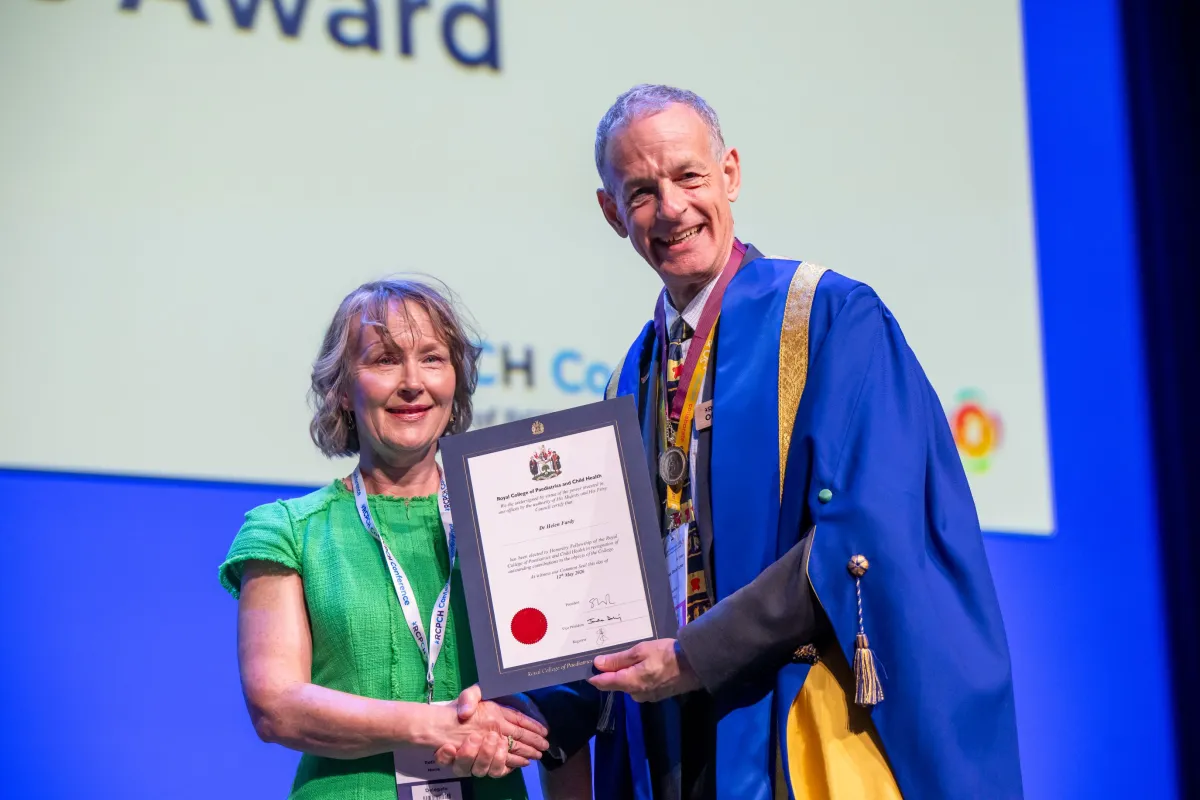
Dr Fardy has had an exceptional impact on child health in Wales, as both a colleague, and leader. Through vision, collaboration and innovation, Helen’ work has led to advances in paediatric care services in Wales, reconfiguration of the training programme with higher trainee satisfaction, as well as expansion and improvement in tertiary paediatric services.
For 20 years, Helen has been a paediatric consultant leading diverse teams and organisations, delivering advances in care from the focused area of PICU through to the population health of young people with chronic pain. Dr Fardy was appointed as the first PICU consultant in Wales and as lead for the S&W Wales Paediatric Intensive Care service (1999-2010).
From leading developments in intensive care services, Helen became the Associate Medical Director for Women and Children’s services at Welsh Health Specialised Services Committee in 2017 and then took briefs in other specialties, before formally commissioning specialist services. She subsequently developed the first "Specialised Services Paediatric Strategy for Wales".
Helen’s achievements with leadership, training and healthcare delivery are far too numerous to cover here, however some of the highlights including the role of Associate Dean, and Head of School for Paediatrics in the Wales Deanery, overseeing over 160 trainees, and as such Dr Fardy was presented with the Dean's Recognition Award for her services to Medical Education in 2017.
Professor Piyush Gupta
Professor Gupta is a distinguished academic, clinician, educator and researcher with over four decades of experience in child health, medical education, research and publishing. Through his work with the Indian Academy of Paediatrics (IAP), UNICEF and WHO, he has played a major role in improving child survival, nutrition and essential newborn care, including rational management of diarrhoea, severe acute malnutrition and pneumonia. He has led and developed national guidelines on antibiotic use and spearheaded an IPA UNICEF programme to increase oral rehydration solution uptake.
Professor Gupta has received numerous national and international research grants and has published extensively, with over 300 papers in indexed journals, more than 450 book chapters, and over 50 books and monographs. His three volume Postgraduate Textbook of Paediatrics is a landmark work in India. He has also delivered nearly 50 prestigious orations, and has been Editor in Chief of Indian Paediatrics for six years.
A highly respected teacher, Professor Gupta has trained generations of undergraduate and postgraduate students, led curriculum development, and delivered faculty development workshops nationwide. His excellence in education was recognised with the Government of India’s “Teacher of Excellence” award in 2015.
Dr Elizabeth Marder
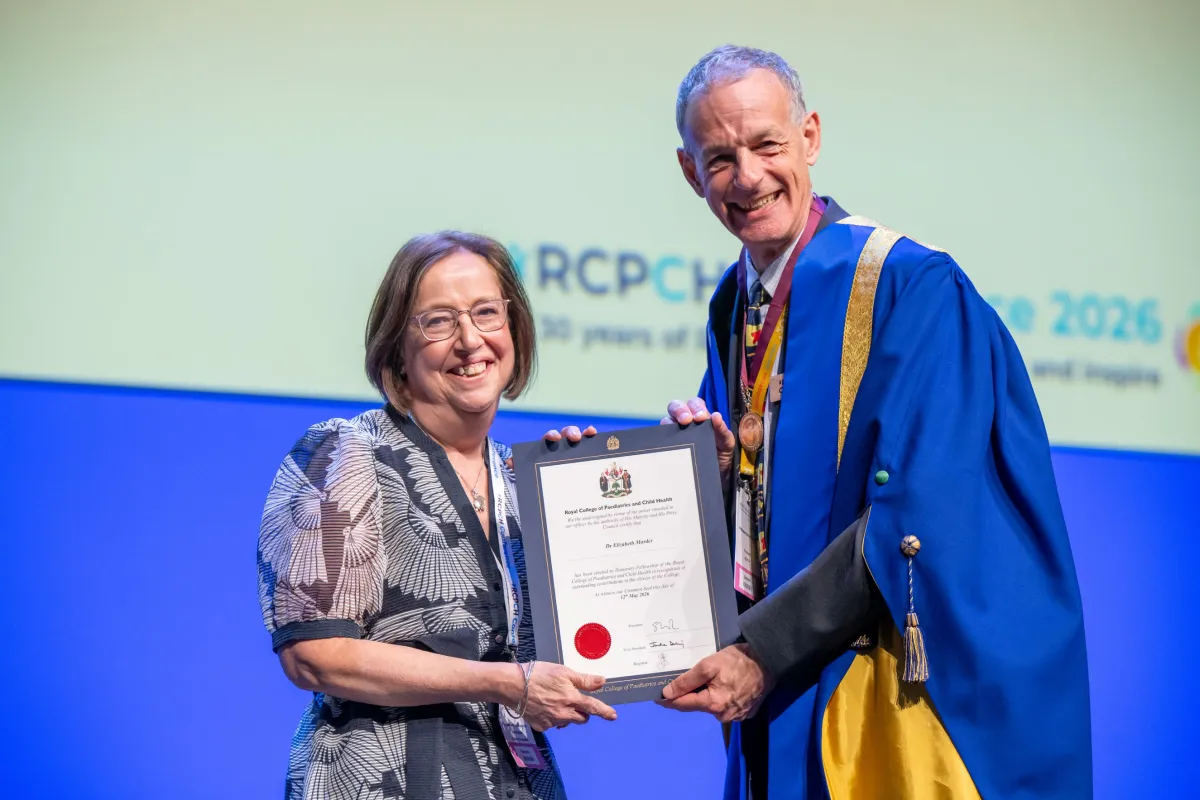
Dr Marder is a Consultant in Community Paediatrics in Nottingham, with 25 years’ experience delivering care for children and young people with neurodisability and neurodevelopmental disorders. She is also part of the local safeguarding service and leads specialist services for Down syndrome and Autism Spectrum Disorder.
From 2008 to 2016, Liz was Pathway Lead Clinician for Children and Young People, leading a Trust-wide service improvement programme with responsibility for quality, risk and safety. Within her Trust she has also held senior roles including Assistant Director for Medical Education and Clinical Lead for Community Paediatrics, and she has served on the Regional Children’s Clinical Reference Group. Liz currently sits on the Ethics of Clinical Practice Committee and is actively involved in medical education as a personal tutor, examiner, appraiser, educational supervisor and lead for the medical mentoring programme.
Liz is a founder and past Chair of the Down Syndrome Medical Interest Group (UK and Ireland), web editor for DSMIG, a regular lecturer and author, and co-editor of Down syndrome – current perspectives. She served as RCPCH Treasurer from 2019 to 2024, providing financial leadership through the COVID-19 pandemic and other significant organisational challenges.
Dr Vasanta Nanduri
Dr Nanduri specialises in Paediatric Haematology, Oncology and Endocrinology. Vasanta is about to take up the position of President for the International Histiocytic Society; an organisation for both paediatric and adult clinicians. She provides specialist opinion and advice to patients and clinicians from various countries relating aiming to improve the lives of patients with histiocytic disorders.
Dr Nanduri is the current head of School for the East of England, and she was Clinical Director for Children's services and then the Divisional Director for Women's and Children's services at her Trust. Vasanta is a trained mentor and Trust Appraiser. Vasanta’s work for the College includes her position as Officer for Examinations from 2020 – 2025. She was instrumental in supporting new centres in Pakistan, Qatar and SL during her tenure as Officer. Vasanta co-led the launch of the Assessment Review. She remains one of our most regular host centres and has been involved in college exams for 20+ years.
Associate Professor Arun Neopane
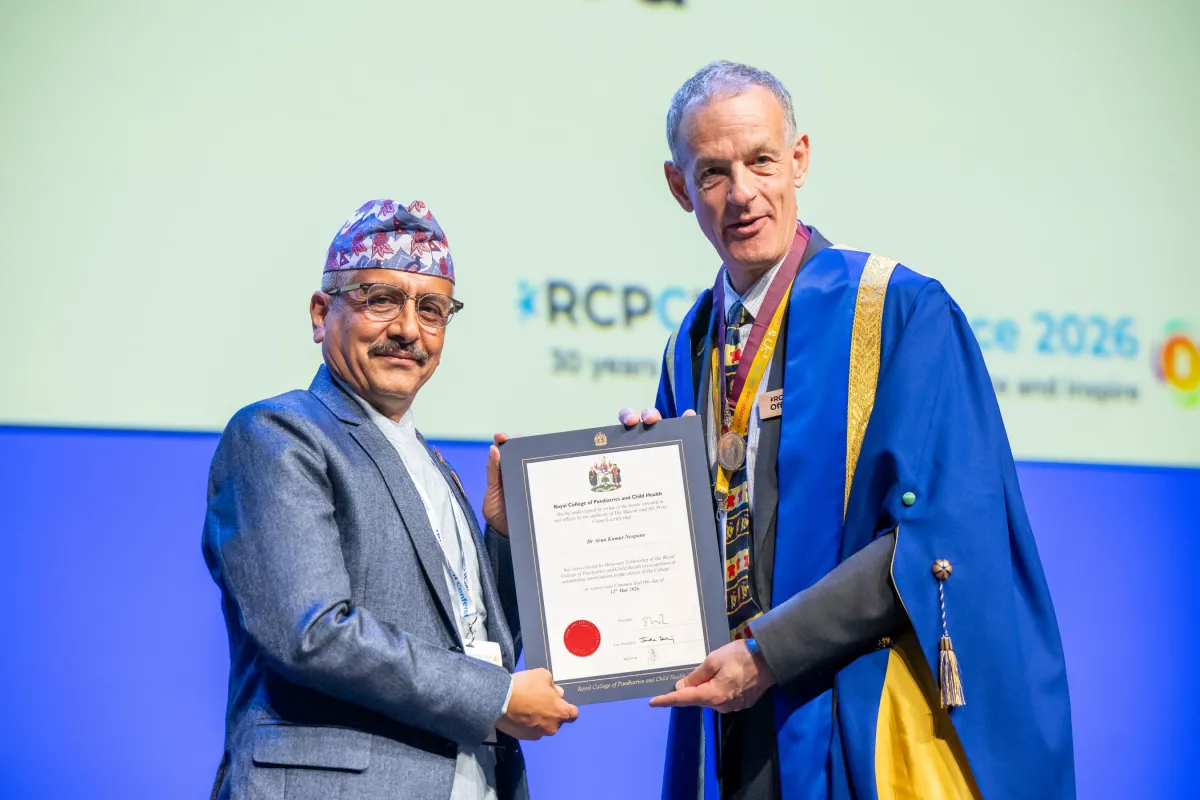
Dr Neopane has been practicing as a consultant in Nepal for 28 years. He is commandant of a tertiary level Military Hospital and Deputy Director General Medical Services of Nepali Army Medical Corps. He led the disaster response for the Gorkha Earthquake 2015. In addition, Dr Neopane is the current President of the Nepal Paediatric Society (NEPAS) as well as Editor in Chief of the Journal of Nepal Pediatric Society (JNPS), amongst other journals.
He is one of the founder members of the Nepal Association of Medical Editors (NAME). He contributed to Managing Children in Disasters, published by the Nepal Paediatric Society.
His work has led NEPAS' engagement with RCPCH's Global team over a number of years, including the successful development of examinations, and establishment of a programmatic collaboration to improve quality of neonatal and paediatric care at Nepalese hospital level. Arun is a key paediatric leader in Nepal, responsible for ensuring that RCPCH and NEPAS together are able, over the coming period, to widen and deepen our partnership.
Professor Sir Andrew Pollard
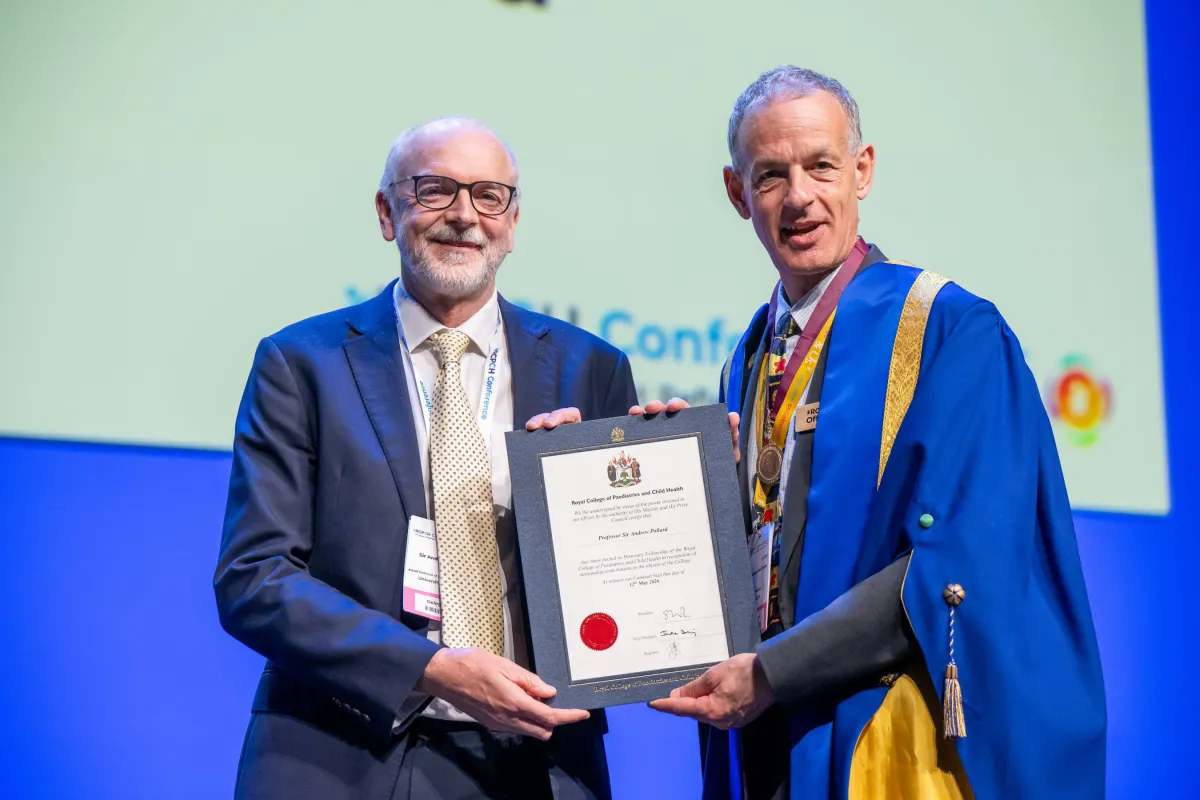
Sir Andrew Pollard had already made major contributions before the SARS CoV 2 pandemic, to child health through his work on vaccines, including those for typhoid, influenza, rabies, Ebola and other infectious diseases.
Sir Andrew has chaired the UK Department of Health and Social Care’s Joint Committee on Vaccination and Immunisation since 2013 and served on the WHO Strategic Advisory Group of Experts from 2016 to 2022. He also chaired the European Medicines Agency’s Scientific Advisory Group on Vaccines and led NICE guideline development groups on meningitis and meningococcal disease. He was a member of the UK Commission on Human Medicines’ expert advisory group and an NIHR Senior Investigator. He was a member of the British Commission on Human Medicines' Clinical Trials, Biologicals and Vaccines expert advisory group.
His achievements have been recognised through numerous national and international awards, election to the Academy of Medical Sciences and the Royal Society, and a knighthood in 2021 for services to public health. Sir Andrew was a key adviser to the RCPCH during the COVID 19 pandemic, and the College awarded him the James Spence Medal in 2022 in recognition of his exceptional contribution to child health research.
Dr Doug Simkiss
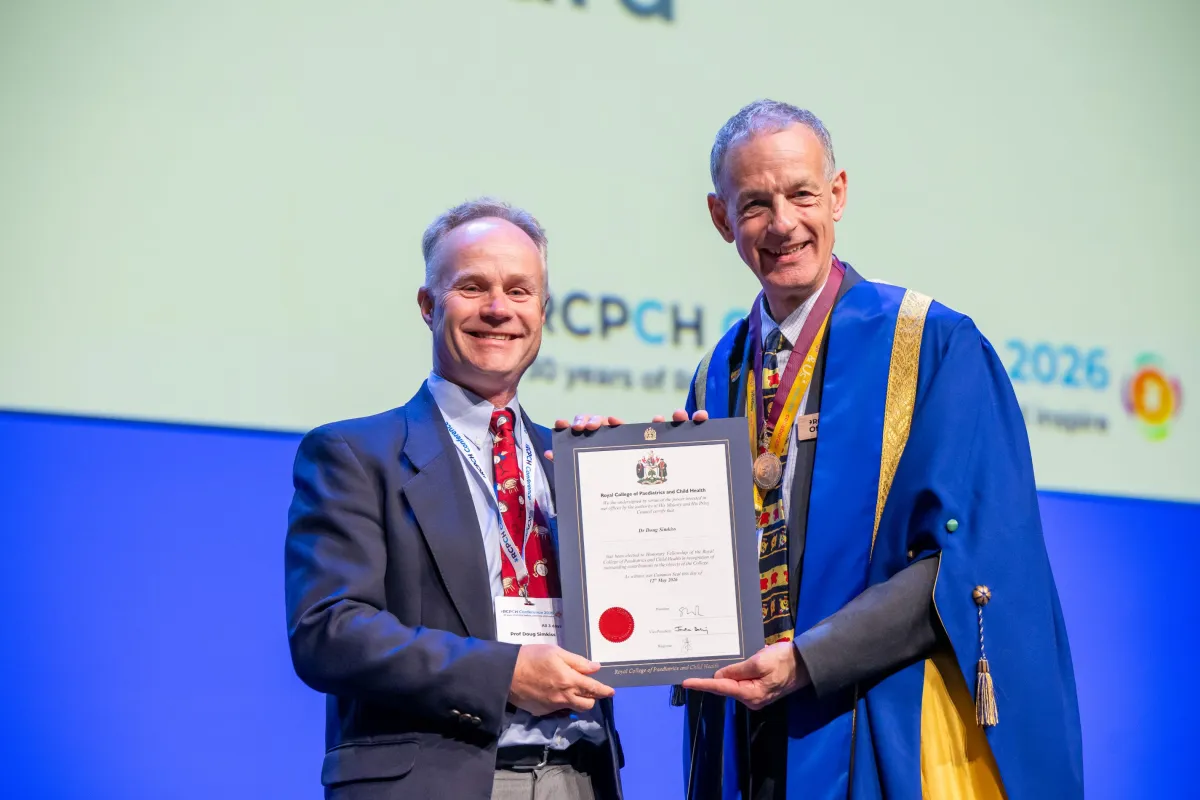
Dr Simkiss is Chief Medical Officer and Deputy Chief Executive at Birmingham Community Healthcare NHS Foundation Trust. Doug is a Professor in Child Health and an honorary Consultant Paediatrician at Birmingham Community Healthcare NHS Trust. He is the designated doctor for looked after children for Birmingham, which is the largest local authority in the country.
Dr Simkiss has been the lead for the British Association of Community Child Health until to September 2025, and he was a member of the NICE / SCIE Topic Expert Group. The aim to develop quality standards to promote health and wellbeing for looked after children and young people. In addition, Doug is a member of the British Academy of Childhood Disability's Strategic Research Group. He was part of the Enhancing Training And Technology for Mothers and Babies in Africa (ETATMBA) project, training non-physician clinicians in advanced obstetric and neonatal care in Malawi and Tanzania.
Doug's research interests are in the health needs of vulnerable children, especially looked after, and disabled children, as well as international child health, with over 100 publications. Dr Simkiss’s work as BACCH lead has been one of a highly valued advisor, partner and stakeholder, including during the SARS-COV-19 pandemic.