
Download the full report below
Demand for paediatric services is outstripping supply and the workforce is stretched
In response to the 2023 NHS Long Term Workforce Plan, the College highlighted that health care needs exceeded workforce resources for babies, children and young people (BYCP) and while services were likely to continue growing, workforce modelling did not sufficiently account for changes in birth rate, increasing complexity and challenges inherent in medical advances. Furthermore, an increase of almost 50% has been forecast for BYCP outpatient and A&E attendances by 2030 in addition to an upsurge in new and re-engaging referrals from paediatrics to NHS Practitioner Health.
All of this has been worsened by an increase in community waiting times such that 44% of community paediatric services are reporting median waiting times of 13-52 weeks.
There is rising pressure on a stretched paediatric workforce. The 2024 RCPCH Rota Gaps Survey, for example, showed that paediatric services across England, Scotland and Northern Ireland were managing an average of 20% gaps across Tier 1 and 2 paediatric rotas. Unsurprisingly, this has had an adverse effect on the wellbeing of the paediatric workforce and sustainable staffing with the recent GMC National Training Survey showing that paediatric postgraduate doctors in training (PGDiT) were reporting the third heaviest workload (of all specialties) with nearly 20% at risk of burnout.
We responded to this situation with Thrive Paediatrics
Our Thrive Paediatrics programme started in 2023 and aims to motivate and support our members and clinical teams to develop a thriving, sustainable workforce that can deliver safe, high-quality care to children and young people.
The programme has three key themes:
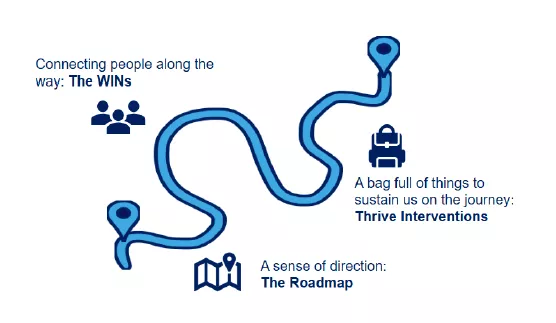
- Roadmap for transforming the working lives of paediatricians - Our best practice guide for wellbeing and sustainable working environments focussed on working lives, professional development, and wellbeing and culture.
- Wellbeing Innovation Networks - Regional and self-forming communities of paediatricians and allied health professionals that collaborate to improve the wellbeing and working lives of colleagues.
- Targeted interventions - Using a bespoke, responsive approach, rather than standardised solutions, to educate members about wellbeing and provide the them with the tools and skills to activate change, leading to our online hub of evidence-based resources.
Our national report presents key findings and recommendations from the programme
Published in December 2025, our report draws attention to important welfare concerns for the paediatric workforce, identifying examples and recommendations to safeguard and sustain this community and ensure high quality care provision for children and young people.